
Scaffold Sheeting for Demolition Projects: Design and Installation Guidance
Scaffold Sheeting for Demolition Projects: Design and Installation Guidance
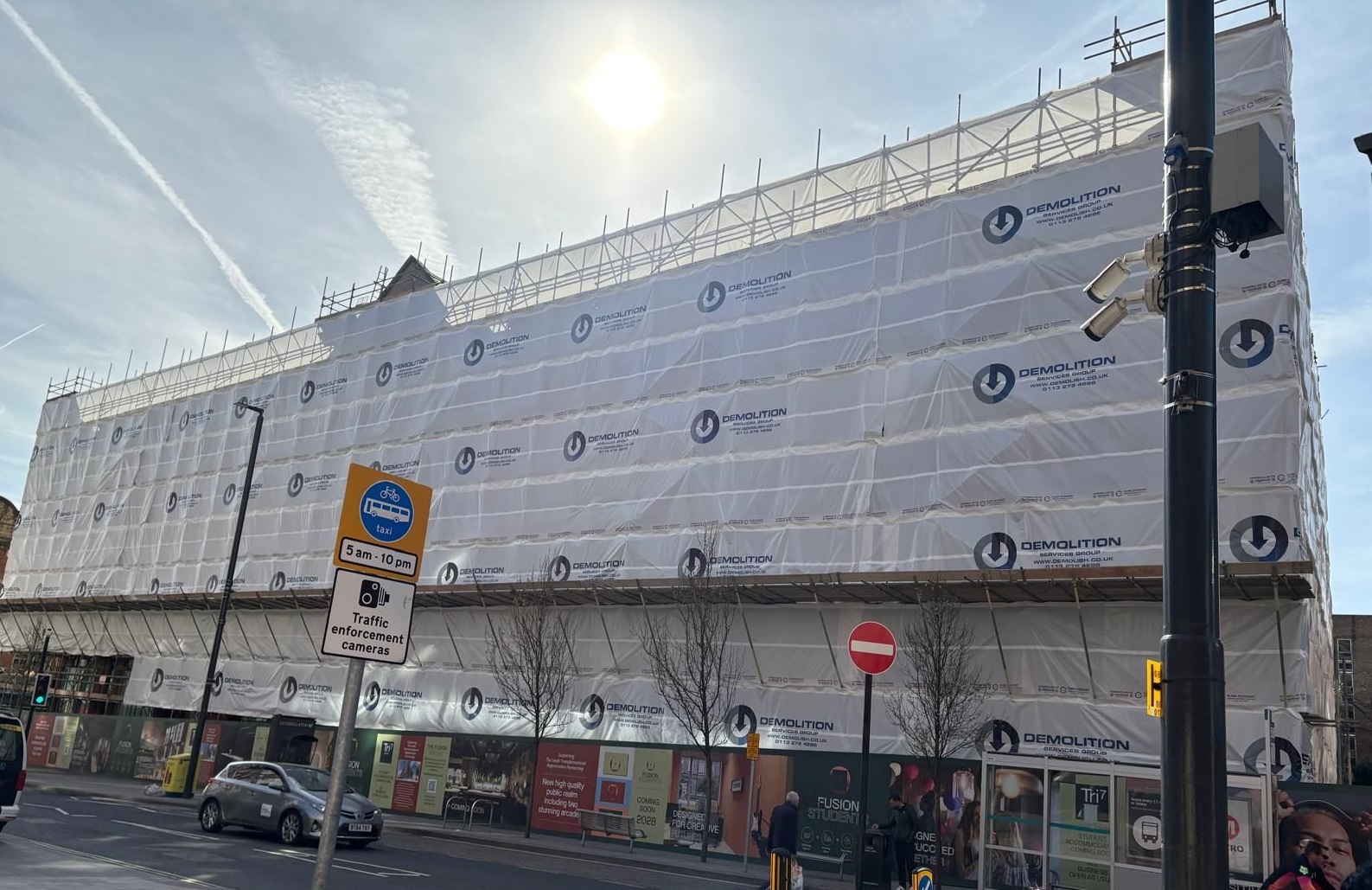
In demolition projects, scaffold sheeting plays a critical role in containing dust, debris, and other hazards while ensuring safety and compliance with environmental regulations.
Proper consideration of each design and installation requirement is essential to maximise its effectiveness. By following these steps, you can ensure a safe and controlled environment during demolition projects.
1. Choosing the right scaffold sheeting
Before installation, select sheeting suitable for your project:
- Material: Common sheeting materials include reinforced polyolefin, high-density polyethylene or PVC.
- Strength: Ensure the sheeting is durable enough to contain debris and withstand wind and project-specific conditions. You should always refer to BS 7955 to ensure that sheeting conforms to the necessary strength requirements. However, for demolition projects we advise extra strength beyond the level required under BS 7955. For best practice, we recommend a tensile strength of at least 800/N50mm and an eyelet strength of least 900 newtons, both provided by our Powerclad FR Premium sheeting.
- Perforations or Non-Perforations: Choose non-perforated sheeting for better dust containment.
- Flame Retardancy: We recommend flame-retardant scaffold sheeting for all projects. Under the terms of the Joint Code of Practice on the Protection from Fire of Construction Sites and Buildings Undergoing Renovation, all contracts valued over £2.5m or part of a larger contract valued over £25m must use scaffold sheeting which have flame retardancy standards independently certified by one of two approved bodies, Warrington Certifire or BRE Global/Loss Prevention Certification Board (LPCB). Failure to comply risks the ceasing or withdrawal of insurance. If the sheeting has printed branding or graphics, make sure that the product’s flame retardancy is certified for its printed form. Read more guidance on this here:scaffold sheeting fire safety guidance.
4. Installing the sheeting
We recommend overlapping sheeting as proper overlapping prevents gaps that can allow dust and debris to escape:
- Overlap each horizontal sheet by at least 6 inches (15 cm).
- For vertical overlaps, use at least 4 inches (10 cm).
- To maximise weather protection, rows of scaffold sheeting should be installed so that each row of sheeting is overlapped on the outside by the next row of sheeting above. However, the opposite (see below illustration) is recommended when sheeting is being used in demolition as this method keeps the debris and dust inside the scaffold.
- Check for sharp edges or protrusions that could damage the sheeting.
- Do not install sheeting on the inside of scaffolds as it will be unable to detach whenever suction forces are experienced. In high winds, this may put excessive forces on the scaffold structure leading to its collapse.
5. Securing with Fasteners
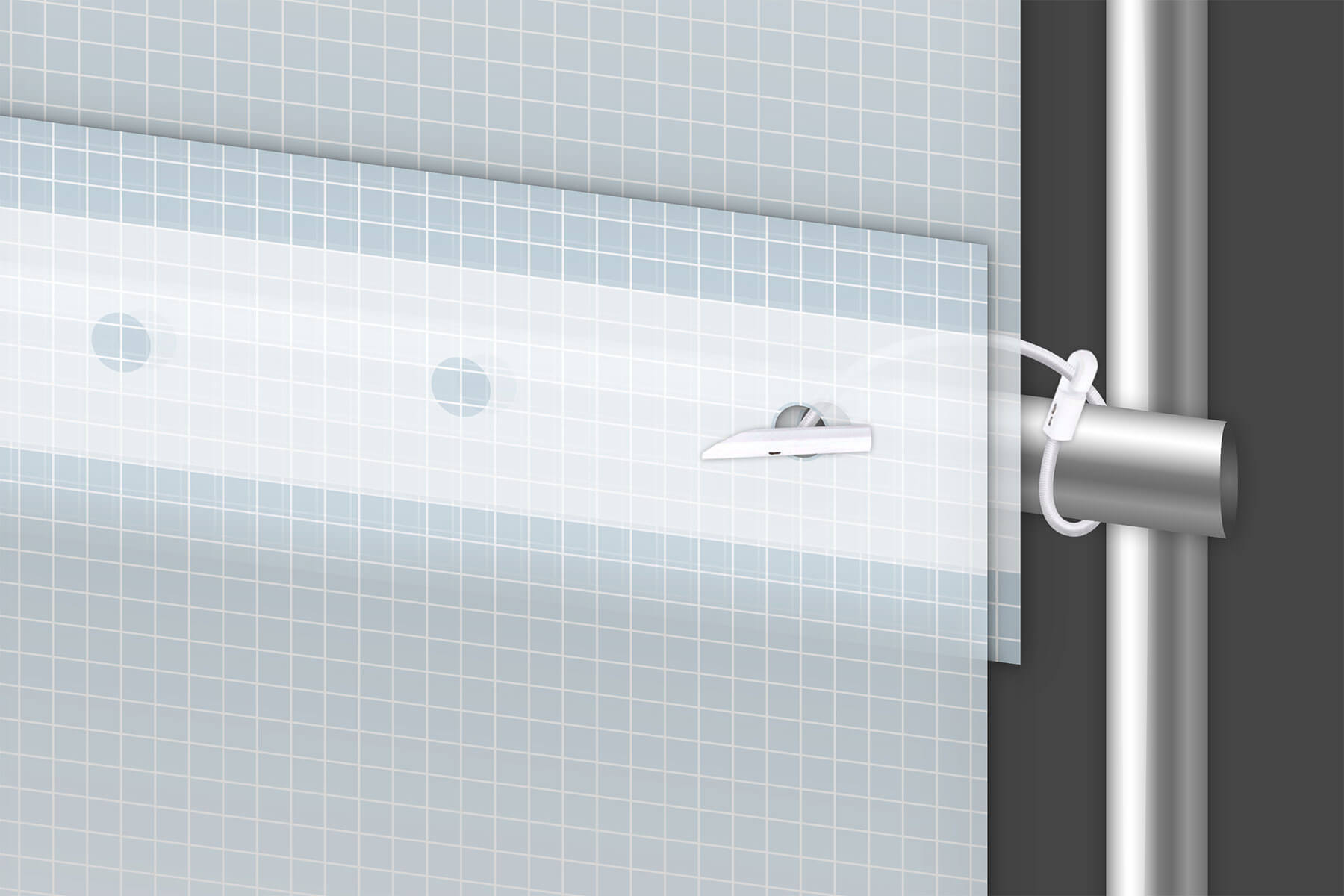
Use appropriate fasteners should be used to keep the sheeting in place. Common types of fasteners include cable ties or elasticated toggle ties which typically secure the sheeting at regular intervals along the scaffolding poles. ITP’s Powertie toggle ties are ideal for high-tension areas as they provide flexibility and prevent tearing.
In windy conditions, an inadequate number of ties may result in the sheeting detaching prematurely, while too many ties may put excessive forces on the scaffold structure leading to its collapse (in extreme winds, the sheeting should be regarded as sacrificial in order to maintain the integrity of the scaffold structure).
BS 7955 compliance requires fasteners to have a minimum breaking strength of 500N. However, ITP recommend a breaking strength of 700N provided by our Powertie fasteners.
ITP recommend a minimum support density of one Powertie per square metre of sheeting for most scaffold installations.
5. Sealing edges for maximum containment
- Use adhesive tape or gasket strips to seal overlaps, particularly at corners or edges where dust is more likely to escape.
- Ensure the bottom edge of the sheeting is anchored securely to the ground or a weighted base.
6. Ongoing inspection and maintenance
To ensure maximum containment,inspect the sheeting daily to check for tears or loose fasteners.Damaged sections should be replaced immediately to maintain containment integrity.
For further advice and guidance on site protection and containment solutions, please contact ITP’s scaffold team on 01347 825 200 or email info@itpltd.com.