
Understanding BS 8485
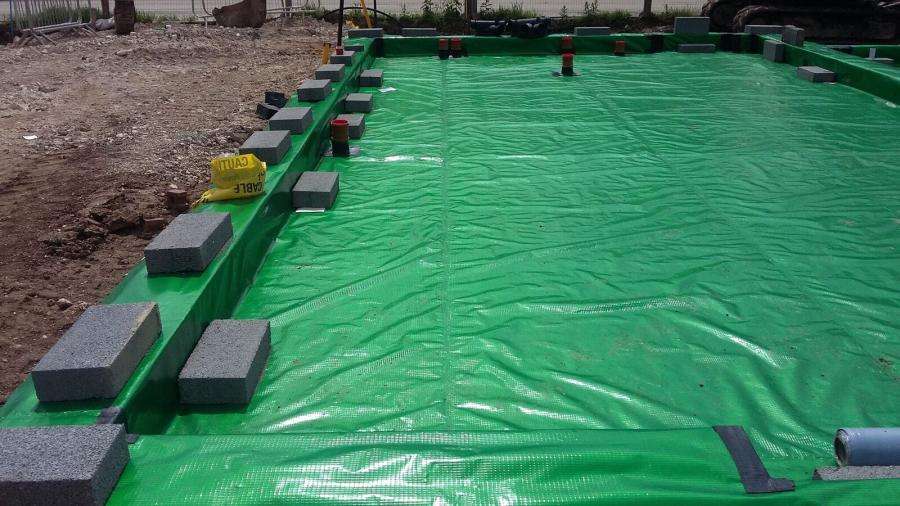
Understanding BS 8485
If you work within brownfield development, contaminated land, or ground investigation in the UK, you’ve almost certainly come across BS 8485. It’s one of the standards that quietly shapes a huge amount of design and risk-assessment work, yet it’s rarely explained in plain terms. Here’s a practical breakdown of what it is, why it matters, and how it’s used.
What is BS 8485?
BS 8485 is the British Standard “Code of practice for the design of protective measures for methane and carbon dioxide ground gases for new buildings.” In simple terms, it’s the industry rulebook for how to assess the risk of ground gases on a development site and design buildings that keep people safe from them.
The current version in use is BS 8485:2015+A1:2019, which supersedes the original BS 8485:2007 and 2015. The standard has been updated over time to reflect evolving industry practice. The most notable changes include a more detailed approach to ground gas assessment.
Key updates:
- Revised scoring of building types with more definition when assigning CS protection scores.
- Revised membrane selection in Table 7 and annex C, attempt at giving clearer guidance for membrane performance.
- Updated examples and reporting requirements.
Why does it exist?
Many development sites, particularly former industrial land and landfill sites, can generate or transmit ground gases such as methane and carbon dioxide. These gases are asphyxiating, and in some cases flammable and explosive. Left unmanaged, they can pose a serious risk to the people who will eventually occupy a building, as well as to the structure itself.
BS 8485 exists to give designers, engineers, and regulators a consistent, defensible process for identifying that risk and specifying the right protective measures.
Who is it for?
The standard is aimed primarily at:
- Designers of gas protection measures – engineers and consultants specifying membranes, venting systems, and floor slab details
- Regulators – local authorities and building control bodies assessing whether a proposed design solution is adequate
- Installers – a structured approach to the membrane and ventilation requirements of the individual project
It’s worth noting what BS 8485 does not cover:
- It doesn’t address other hazardous ground gases beyond methane and carbon dioxide
- It doesn’t cover situations where gases are introduced into a building by the activities carried out inside it.
The format of the standard
BS 8485 is well organised and structured in order to guide from site investigation through to design of ground gas measures, creating a building which complies to all requirements:
- Overview of ground gas protection – the principles behind the whole process
- Site investigation – how to gather the data needed to understand gas conditions on site
- Characterisation and hazard assessment – turning monitoring data into a defined risk category for the site (commonly referred to by its CS classification)
- Solutions choice and detailed design – matching the risk category to an appropriate level of protection, whether that’s a gas-resistant membrane, a venting system, or a combination of measures
- Implementation, verification and reporting – making sure what gets built matches what was designed, and that it’s properly documented
Why it matters in practice
For anyone involved in bringing a site through planning and into construction, BS 8485 is often the reference point that ties together the site investigation report, the risk assessment, and the final building design. Getting it right matters for a few reasons:
- Regulatory approval – building control and environmental health officers will expect to see a BS 8485-compliant assessment before signing off on a scheme
- Cost control – over-specifying protection measures wastes money; under-specifying them creates real safety and liability risk
- Long-term safety – the whole point of the standard is to make sure ground gas never becomes a hazard for the people living or working in the finished building
BS 8485 isn’t static. The move from the 2007 edition to 2015, and the subsequent 2019 amendment, both reflected lessons learned and evolving best practice across the geo-environmental industry. Anyone specifying or reviewing gas protection measures should always check they’re working to the current edition, as design tables and thresholds have changed between versions.
Conclusion
More than a compliance document, BS 8485 provides the framework for turning ground gas monitoring data into proportionate, defensible protection measures. Whether you’re a geo-environmental consultant, a structural engineer, or a developer, understanding its structure helps you ask the right questions early, avoid costly redesigns later, and make sure the buildings going up on former industrial land are genuinely safe to occupy.
This article is intended as a general introduction to BS 8485 and does not replace consultation of the current standard itself or advice from a qualified geo-environmental or geotechnical specialist for any specific project.